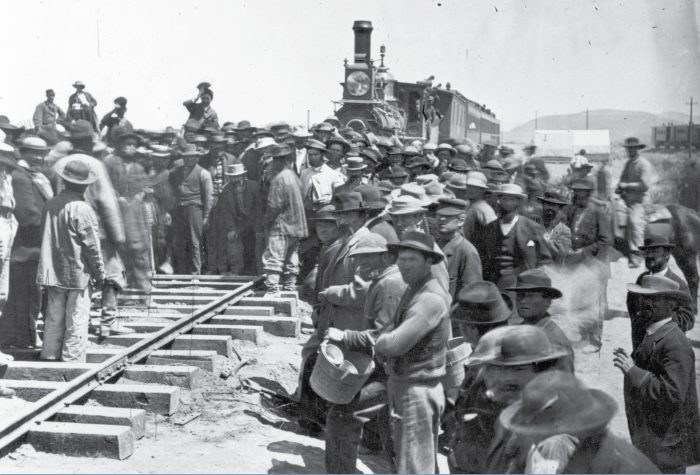
“Chinese Laying Last Rail, May 10, 1869,” Andrew Russell, Kyle Watt Collection, UC San Diego
|
Before the Transcontinental Railroad was completed in 1869, traveling from the East coast of the United States to the West Coast was a long and often dangerous trip that took six months to complete. With the support of acts of Congress, the Central Pacific railroad company worked from Sacramento and built east, and the Union Pacific railroad company worked from Omaha and built west. The two companies joined their railroads, at Promontory, Utah, and reduced the time of the cross country trip from six months to just two weeks. The work to build the railroad was dangerous and difficult and both companies had trouble hiring workers. Central Pacific at first relied Irish workers but later in the project, the majority of the Central Pacific’s workers were Chinese immigrants, who were often paid less than other workers. The Transcontinental Railroad changed travel, but it also changed Native American lives. The railroad cut through tribal lands, changing the environment and further restricting Native American rights to the land.
|