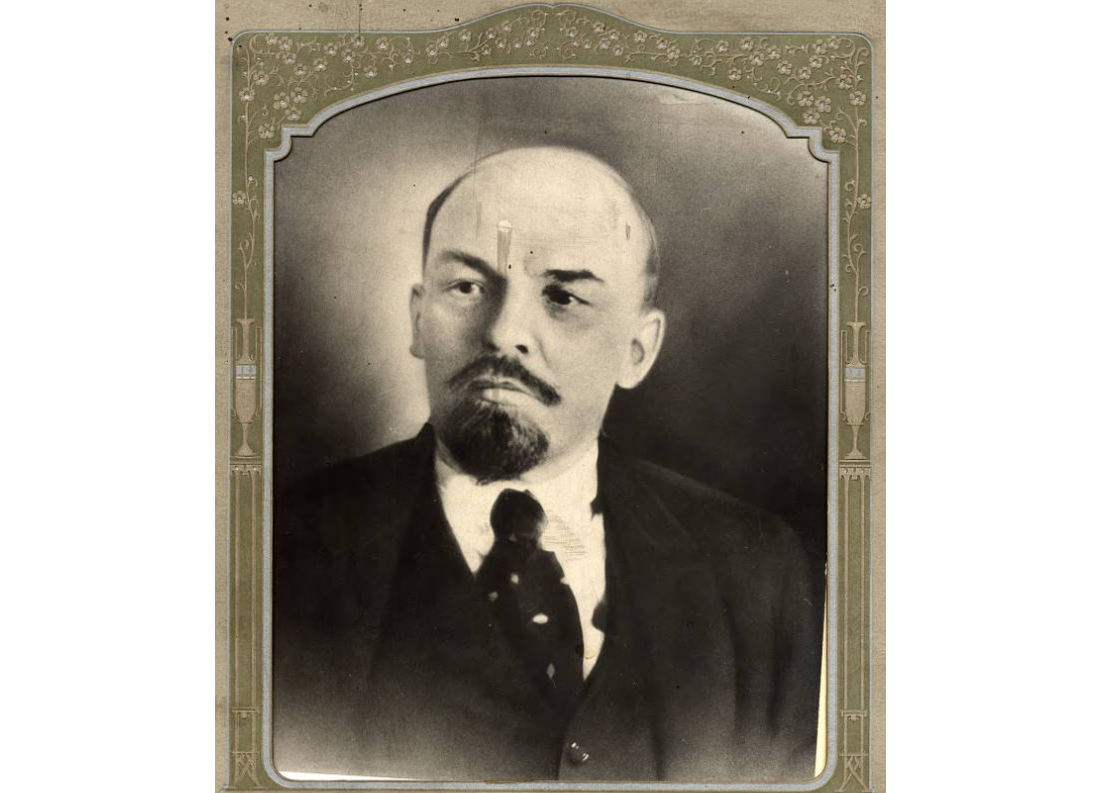
Portrait of Lenin, 1910-1919,
University of Minnesota
Libraries, Immigration History
Research Center Archives.
|
In 1917 anti-Tsarist revolutionaries gained great support in Russia as World War 1 continued to devastate Russia’s army and food supply. In response to this, protesters began taking to the streets of Pretograd (now St. Petersburg) and many Russian imperial soldiers began deserting to join the growing Bolsheviks resistance against the Tsar and his government. In March 1917 Tsar Nicholas II abdicated the throne and gave power over the
Duma, the representative Russian body which was primarily made up of upper-class or royal men. This was not enough to quell the revolutionaries, and on October 7, 1917 18,000 Bolshevik troops surround the Winter Palace which now housed the Duma. The troops stormed the palace, and on the next day, Vladimir Lenin, the leader of the Bolsheviks, proclaimed a new Russian government. This event, known as the October Revolution or the Bolshevik Revolution, sparked the Russian Civil War which ended in the victory of Lennin’s Red Army against the Tsarist White Army and the establishment of the Soviet Union. |