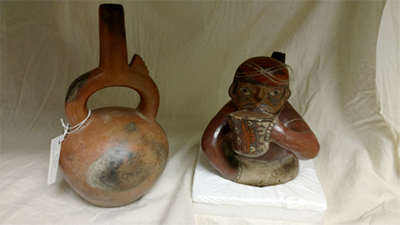
Untitled Photograph of Native
American artifacts , 2017,
University of Denver
(Department of Anthropology)
|
The Native American Graves and Repatriation Act was a United States law passed on November 16th, 1990. According to the law all federal agencies that receive government funding must return any Native American cultural items (ex. human remains, sacred objects) to the most closely affiliated legally recognized tribe. There have been many problems with the law, such as it only applies to artifacts that have been discovered after November 16th 1990 unless an artifact is specifically requested by the tribe, that it only applies to federally recognized tribes which make up only part of the Native American population in the United States, and that there often cannot be a direct descendents found that connect to the remains. Even with these problems, the law has seen success. Around 32,000 individuals remains have been returned to their respective tribes, and many view the law as a great moment of positive change in the dynamic between the federal government and Native Americans after over a century of mistreatment of Native remains. The most famous case involving the NAGPRA is that of the Kennewick Man, which evolved the repatriation of the oldest skeletal remains found in North America.
|